Consumer Insight
What Australian consumers actually want from health & wellness brands in 2026
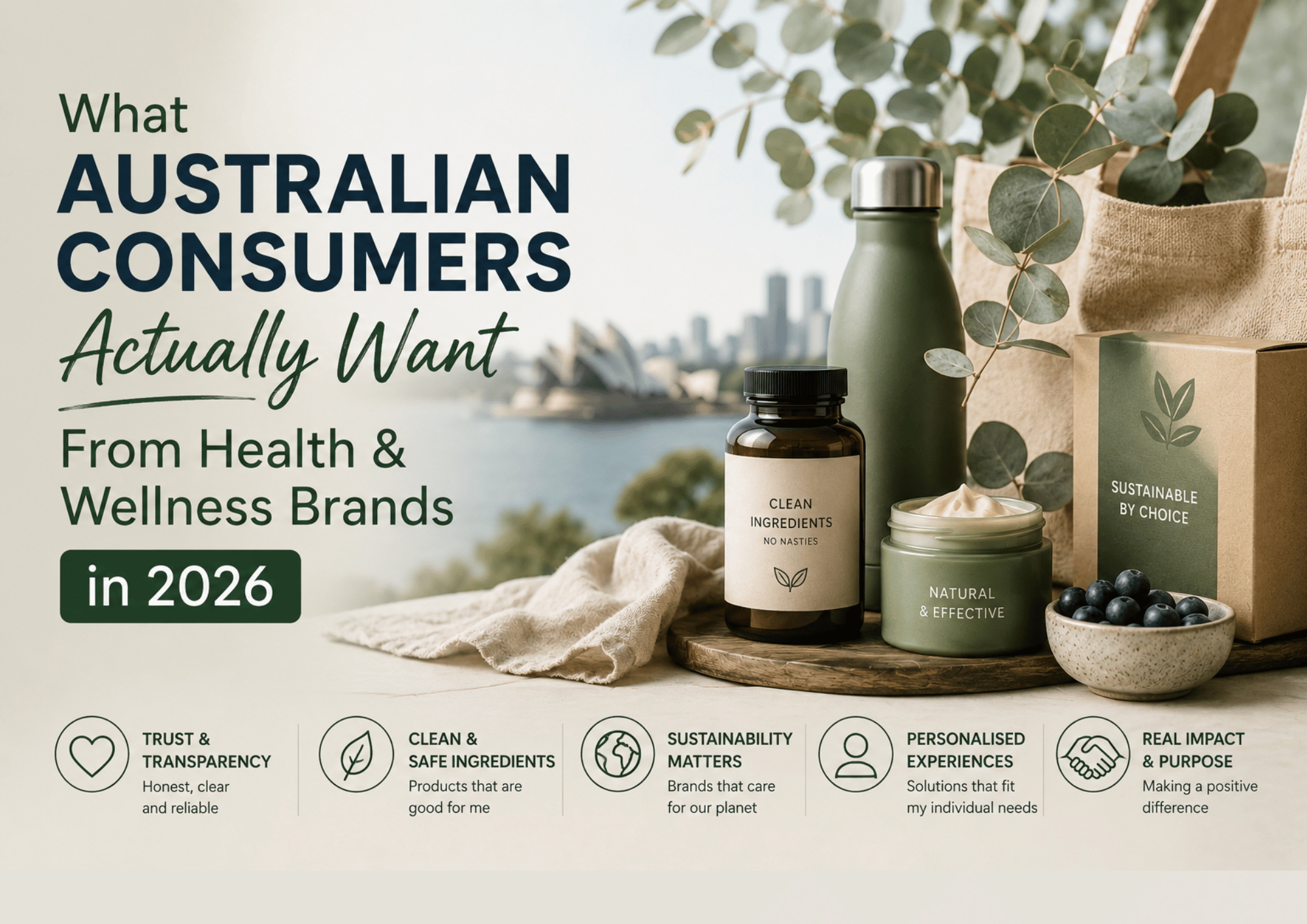
For Australian health and wellness brands, trust, transparency and evidence are no longer nice-to-have brand values. They are part of the product experience.
If you're building or marketing a health and wellness product in Australia right now, you're operating in a market that has fundamentally shifted in the past three years.
The consumer who walked into a health food store in 2021 and trusted a “natural” label at face value is not the same consumer you're selling to in 2026. Today's buyer reads ingredient lists, cross-references certifications, checks country of origin, and looks for evidence that a brand's values extend beyond its marketing.
Understanding what's actually driving purchase decisions — and what's quietly killing conversion — is the difference between a brand that grows and one that plateaus.
For health and wellness brands, credibility is no longer created by a single claim. It is built through the full trust system around the product.
Trust is the product
In a saturated category, the actual product is almost secondary to the trust infrastructure around it. Consumers aren't just buying a supplement, a skincare product, or a protein powder. They're buying confidence that it will do what it says, that it won't harm them, and that the brand behind it operates with integrity.
The brands winning in this environment share a common trait: they treat transparency as a competitive advantage, not a compliance obligation.
This means publishing full ingredient lists without proprietary blend hiding, being upfront about manufacturing locations, and communicating clearly when formulations change.
Sustainability is now a baseline expectation
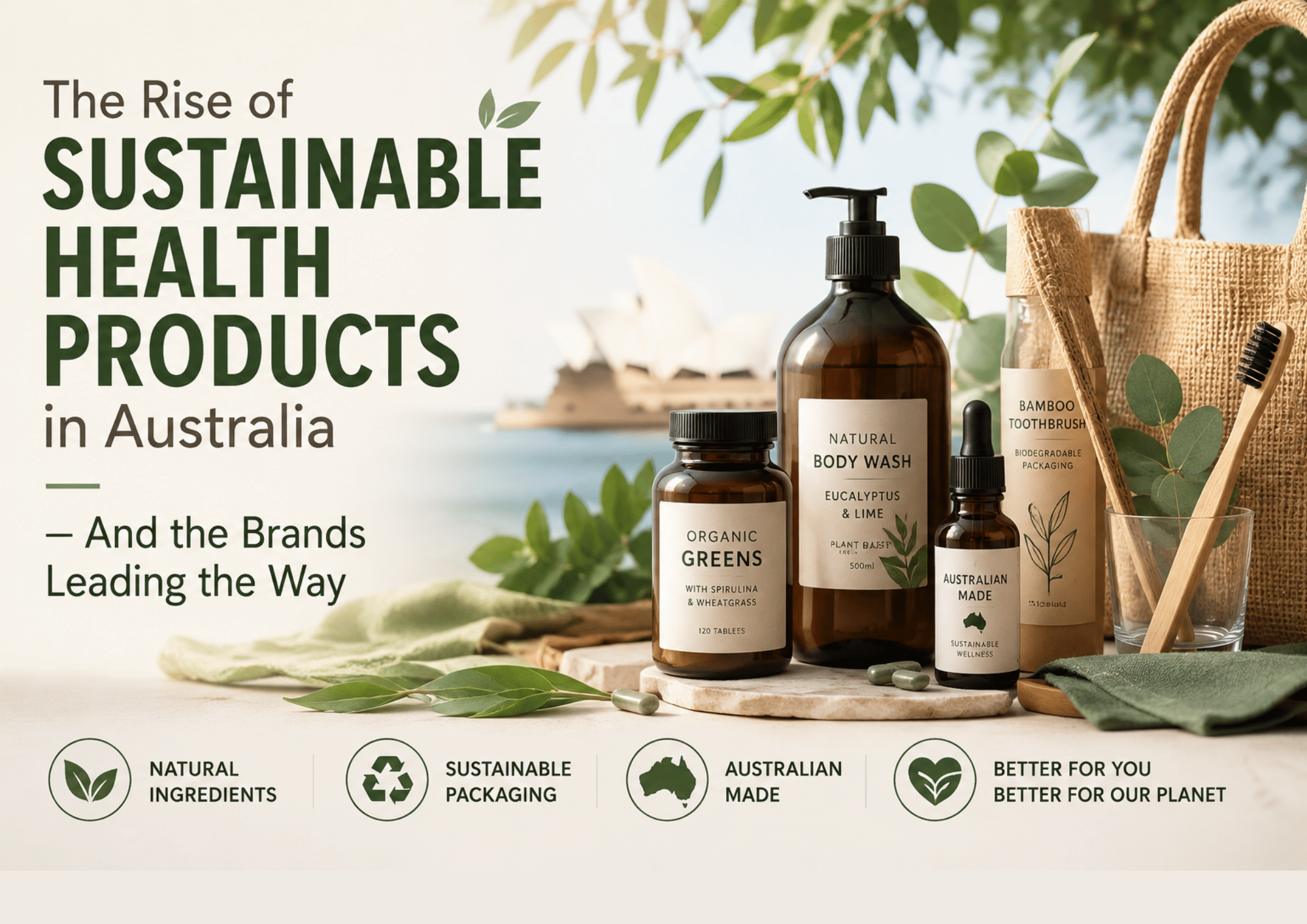
Three years ago, sustainable packaging was a nice-to-have. Today, for a meaningful segment of Australian health and wellness consumers — particularly in the 25–45 demographic — it's closer to a baseline expectation.
But sustainability in 2026 goes beyond switching to recycled packaging. Consumers are increasingly asking about:
- Ingredient sourcing — where ingredients come from, and who grows, harvests or manufactures them.
- Carbon footprint — whether the brand is measuring and reducing its emissions over time.
- End-of-life — what happens to the product and packaging after use.
Brands that can answer these questions specifically and honestly are building a durable competitive advantage. Brands that gesture at sustainability without substance are increasingly being called out.
Third-party validation cuts through
With so many brands making similar claims, consumers have become highly attuned to the difference between self-promotion and independent verification.
Certifications, clinical testing, ingredient transparency databases, and independently awarded recognition all carry weight that brand-generated content simply cannot replicate.
The growth of independent awards programs in the health and wellness space reflects this shift. Consumers want someone else — someone without a commercial stake in the outcome — to have looked at the product and decided it meets a standard.
For brands, this means earning and displaying credible third-party recognition can help strengthen the trust story around a product — particularly when that recognition is based on published criteria and clear assessment principles.
What conscious consumers are actively avoiding
Understanding what repels today's health and wellness consumer is as important as understanding what attracts them.
Greenwashing
Environmental claims that cannot be substantiated are increasingly noticed by consumers and regulators. Vague sustainability language may create short-term appeal, but it can damage trust when the proof is not there.
Ingredient vagueness
“Proprietary blend” or “natural fragrance” without further detail is a red flag for an increasingly educated consumer base.
Manufactured urgency
Flash sales, countdown timers and artificial scarcity tactics often feel out of place for brands positioning themselves around wellness, care and authenticity.
Influencer saturation without substance
Consumers have become adept at distinguishing paid promotion from genuine endorsement. A product recommended by ten influencers with identical captions is less persuasive than one mentioned organically by one trusted voice.
What this means for your brand in 2026
The opportunity for health and wellness brands right now is significant — but it belongs to the brands willing to operate with genuine transparency and back their claims with evidence.
If your product genuinely does what you say it does, if your sourcing is ethical, and if your brand behaves the way it asks consumers to — the market is ready to reward you for it.
The Australian Health & Wellness Awards 2026 exists to find those brands and give them the recognition they've earned.
The Australian Health & Wellness Awards is an independent recognition program celebrating transparency, sustainability, and consumer-led excellence in Australian health and wellness.
Ready to have your brand reviewed against published criteria?
Enter the 2026 Australian Health & Wellness Awards and showcase your product, service or organisation through a credible recognition program.
Frequently asked questions
What do Australian health and wellness consumers want in 2026?
Consumers increasingly expect clear product information, transparent sourcing, responsible claims, practical usability, sustainability evidence and trust signals that extend beyond brand marketing.
Why does third-party recognition matter for wellness brands?
Third-party recognition can help brands communicate that their product, service or organisation has been reviewed against external criteria rather than relying solely on self-promotion.
How can a health and wellness brand build trust?
Brands can build trust by making claims responsibly, publishing clear ingredient and sourcing information, explaining sustainability choices, avoiding vague language, and supporting claims with evidence.